
It’s simple: kitchen display systems are a superior alternative to traditional paper tickets. While many restaurants are attempting to automate the front end of restaurants by providing digital menu boards and self-ordering kiosks, the back end is often ignored.
Kitchen display systems provide a seamless back of house experience for your employees, so they can work to the best of their abilities to serve your customers.
What is a Kitchen Display System?
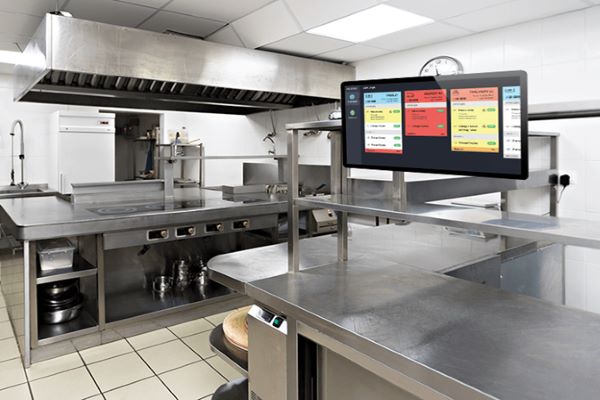
Kitchen display systems are the digital display boards that keep back-of-house staff informed on new orders, cook times, and prep progress. With a KDS, BOH staff receive orders directly from the POS in real time and can send orders to screens at different prep stations as the order is made.
Reasons Why Restaurants Need a KDS:
1. Optimize Order Accuracy
With a kitchen display system, the opportunity for human error is significantly reduced. Once customers enter their order into the system via a self-ordering kiosk or mobile point-of-sale system, the completed order is sent directly to the restaurant kitchen display system for preparation.
In this process, the cashier is removed as an intermediary and any room for human error is immediately eliminated. Customers can input their modifications, allergens, and dietary restrictions directly and the kitchen will receive this information quickly and accurately.
2. Track Fulfillment Times
Once the order is sent to the KDS, the kitchen display will automatically track prep and fulfillment times. With display screens placed at every prep station, these analytics can be broken down by each station’s portion of the process.
This helps BOH staff to understand the points of excellence and the points of improvement in the kitchen, introducing a more optimized workflow.
3. Make Prep and Cooking More Streamlined
With screens at each station, prep for orders can be paced as necessary. Expo station screens will display only what needs to be expo’d at that time, instead of tickets piling up for orders that won’t be done at the sauté station for 20 minutes.
KDS systems for restaurants also track stock and update stock levels immediately as orders are received, notifying BOH staff of any low stock or menu ingredients that need to be prepped and restocked.
This integrated preparation workflow keeps staff on track with the task at hand instead of becoming overwhelmed, and it helps avoid any stock shortages.
4. Increase Workflow Efficiency
Kitchen display systems organize incoming orders to ensure maximum efficiency. The orders are sorted according to importance and urgency so your employees know exactly which orders to complete first.
A good KDS is brightly colored and lit, ensuring your employees can clearly keep track of orders and work on them collectively.
GRUBBRR KDS screens are easy-to-read and have optimized view capabilities, meaning employees will only have to focus on the 3 or 4 most important orders at a time instead of being overwhelmed, discouraged, and distracted by order tickets piling up.
With KDS’ time analytics capabilities, you can increase work efficiency by monitoring how long it takes for your staff to complete an order, from start to finish. By observing which part of the order preparation process takes the most time, you can identify inefficiencies and attempt to fix them.
The system also automatically sets timed goals for order completion. These concrete goals ensure that your employees work at a consistent pace to provide a pleasant dining experience to all your customers.
5. Streamline FOH and BOH Workflows
Kitchen display systems organize internal communications to guarantee no order is missed.
Traditional order tickets cannot promise the same. These paper tickets are easy to misplace, misinterpret, or even spill on, but with a color-coded and brightly lit display system, these mistakes can be easily avoided.
With kitchen display systems, orders proceed straight from customers to the kitchen to eliminate miscommunication in the relay process. Orders can be efficiently paced by course instead of relying on employees to send an entrée order to the kitchen at the exact right time.
Plus, your employees have the ability to change an order status from received or in progress to completed, keeping everyone in the loop on their urgent tasks.
As such, FOH employees will be notified when orders are ready, ensuring that all customers receive hot food fresh from the kitchen.
6. Reduce Paper Waste
By using kitchen display systems, you will also be contributing to waste reduction. Paper tickets are a huge waste of natural resources – the restaurant industry alone generates 1.5 billion pounds of paper waste annually.
Running a KDS kitchen can help put a dent in this waste, save money on paper costs, and cater to increasing demand for eco-friendly restaurants and products.
7. Integrate Online Ordering
Online ordering – whether from your restaurant’s website or a food delivery app – is easily integrated into the kitchen display. Orders are paced appropriately by pickup or delivery time, but with timing of in-person orders considered as well.
KDS kitchens can also put automatic pauses on online orders when the kitchen staff is in the weeds, getting everyone back on track faster. This ensures a timely and pleasant experience for all customers, whether ordering in-person or at home.
8. Improved Data Collection
Time analytics and data collection can be integrated with menu and item popularity data, providing restaurateurs running KDS kitchens with a powerful understanding of their business.
Not only will the restaurant’s kitchen display system give insight into any gaps in timing or workflow efficiency, but points of improvement in the menu or in stock ordering and pacing will be identified.
This comprehensive data collection means you can learn how to run your business better with a complete guide to the areas needing improvement.
9. Decreased Food Waste
With more accurate orders and a streamlined workflow that ensures hot food and timely service, food waste is significantly reduced.
Fewer orders will be sent back for missing modifications or undercooked food, avoiding the costs of this lost food and preventing some of the 11.4 million tons of food waste the restaurant industry creates.
10. Overall Improved Customer Experience
All restaurant operations have one ultimate goal — customer satisfaction.
Streamlining in the order preparation process leads to a swift and efficient kitchen workflow. This, in turn, guarantees a comfortable and relaxing dining experience for customers and a transparent food preparation process for employees.
Conclusion: Restaurants Need KDS Kitchens
Kitchen display systems are the innovation the BOH has long been waiting for and should be considered essential restaurant equipment.
The days of paper tickets are long over – restaurants need the insight and efficiency gains a kitchen display system can offer.
However, not all KDS systems for restaurants are made the same – companies like GRUBBRR offer quality products that are sure to provide the maximum benefits of a KDS kitchen. Pricing is fair, and the savings and efficiency gains you’ll see from these display systems greatly outweigh the initial investment.